 Ultimate guide
Green Building Solutions for Renovations That Pay Off
Last Updated: November 8, 2026
Quick Summary
Green building for renovations means upgrading the building envelope first: air sealing, insulation, duct sealing, and ventilation, ranked by impact after a professional home energy audit. These measures usually pay back fastest, while windows and solar panels come last because their savings per dollar are lower.
- Get a written home energy audit with a blower door test before demolition opens the walls.
- Air sealing and attic insulation rank highest; window replacement and solar panels rank lower on savings per dollar.
- Seal before you insulate, and never skip the attic hatch and rim joist.
- A tightly sealed house needs planned mechanical ventilation in the same scope to avoid trapped moisture.
- Confirm incentive eligibility and required paperwork before you budget the scope around a rebate.
Table of Contents
- What Green Building Solutions Actually Change in a Renovation
- Start With a Home Energy Audit Before Renovation
- Rank Retrofit Measures by Impact Before You Spend
- Insulation, Air Sealing, and Weatherization That Hold Up
- Sustainable Building Materials for Remodeling: What to Specify
- Green Home Renovation Ideas That Fit Real Budgets
- Water, Indoor Air Quality, and the Systems Behind Both
- Green Renovation Costs, Incentives, and Payback Periods
- Sequencing a Green Remodel With Meadowview Construction
- Frequently Asked Questions
What Green Building Solutions Actually Change in a Renovation
Green building is the practice of designing, building, and renovating structures to reduce environmental impact while improving durability, comfort, and operating performance. In a renovation, green building solutions change three things that matter to a homeowner: how much energy the house consumes, how healthy the interior air is, and how long the new work lasts before it needs replacing.
The pattern across many renovations holds: the upgrades that pay off are rarely the flashy ones. A tankless water heater with a failing distribution system saves nothing. Solar panels on a leaky attic waste their output. The measures that pay back are usually the least photogenic: air sealing, insulation, water management, and ventilation.
That is the throughline of this guide. Green building solutions for renovations work when they are sequenced correctly, and they disappoint when they are treated as a shopping list. Below, we walk through how to audit first, rank measures by impact, specify materials that hold up, and understand costs and incentives before you commit.
The order matters more than the menu. A homeowner who audits first and buys second usually spends less and gets more.
Start With a Home Energy Audit Before Renovation
A home energy audit before renovation is a room-by-room and assembly-by-assembly assessment of how a house uses and loses energy. It identifies where air leaks, where insulation is missing or compressed, and how heating, cooling, and ventilation systems perform together.
Why do it before demolition rather than after? Because a renovation opens walls. Once framing is exposed, an auditor or contractor can see what a visual walkthrough never reveals: gaps at rim joists, disconnected duct runs, insulation that has settled, and moisture paths behind finishes.
A useful audit typically covers:
- A blower door test to measure whole-house air leakage
- Thermal imaging of walls, ceilings, and window edges
- Duct leakage and pressure testing where ducts run through unconditioned space
- Combustion safety checks on any gas appliance
- A written report ranking improvements by estimated impact
The U.S. Department of Energy's home energy assessment guidance explains what a professional audit includes and how to read the results. Get the report in writing before you finalize a scope. A renovation planned without one is a guess dressed up as a plan.
Rank Retrofit Measures by Impact Before You Spend
Ranking retrofit measures by impact means comparing each upgrade on four axes: energy saved, comfort gained, cost per unit of improvement, and how disruptive the work is to the rest of the renovation. The measures that win on all four usually sit in the building envelope, not in the equipment room. The ranking shifts with climate zone, house age, and construction type, so the table below is a starting order, not a universal answer.
The common measures for a typical older home renovation can be ranked as follows, with the mechanism behind each impact:
| Measure | Typical Impact | Relative Cost | Best Timing | Why It Ranks There |
|---|---|---|---|---|
| Air sealing | High | Low | Before drywall | Stops conditioned air from escaping through gaps at rim joists, top plates, and penetrations; reduces both heating and cooling load |
| Attic insulation | High | Low to moderate | Before ceiling work | Slows conductive heat loss through the largest uninsulated assembly in most older homes |
| Duct sealing | Moderate to high | Moderate | During HVAC access | Prevents conditioned air from leaking into unconditioned attics, crawlspaces, and garages |
| Window replacement | Moderate | High | Last, after envelope | Improves comfort and appearance, but the energy savings per dollar are usually lower than envelope work |
| LED lighting | Low per fixture | Very low | Anytime | Cuts lighting energy, but lighting is a small share of most homes' total load |
| Solar panels | Moderate | High | After envelope work | Output is wasted if the envelope leaks; sizing should follow load reduction |
The lesson in that table is uncomfortable for anyone who wants a dramatic before-and-after photo. Windows and solar get the attention; air sealing and attic insulation get the savings.
Climate zone changes the order. In a cold climate, attic and rim-joist air sealing plus insulation deliver the largest heating savings, and duct sealing matters most when ducts run through unconditioned space. In a hot-humid climate, air sealing and moisture control move up, and ventilation becomes non-negotiable because a tight house traps humidity. In a mixed climate, the envelope still leads, but window selection and shading deserve more weight than in a heating-dominated house.
House age and construction type change the order too. A pre-1950 balloon-frame house has different air-leak paths than a 1970s ranch with a vented crawlspace, and a masonry wall assembly needs different moisture management than a wood-frame wall. A home energy audit is what converts this general ranking into a specific one for your house. Without it, you are guessing which row applies to you.
Watch out: ranking measures by sticker price rather than by cost per unit of improvement leads homeowners to buy the visible upgrades first and the effective ones never. The cheapest kilowatt-hour is usually the one you stop wasting through the envelope.
Insulation, Air Sealing, and Weatherization That Hold Up
Weatherization is the combination of air sealing, insulation, and moisture control that makes a building envelope perform as designed. It holds up when the details are right and fails quietly when they are not.
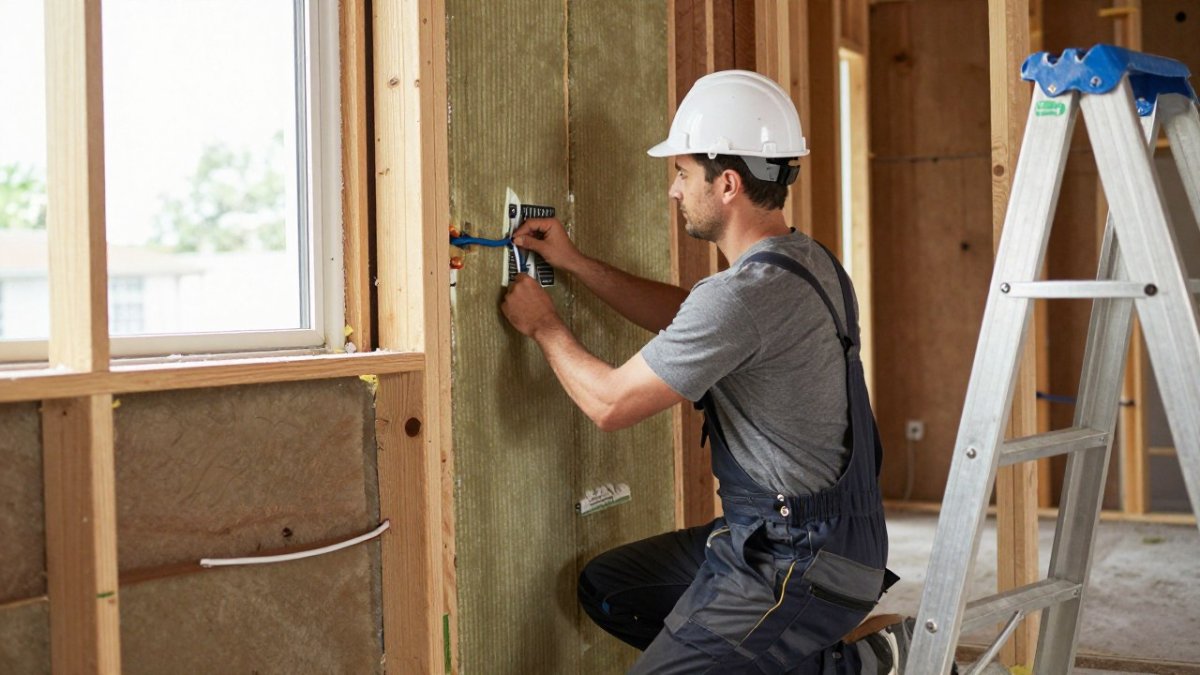
A common mistake is insulating before sealing. Batts pressed into a cavity with gaps at the top plate and around penetrations let air move past the insulation, which cancels much of its value. Seal first, then insulate.
The second mistake is skipping the attic hatch and rim joist. Both are small areas with outsized leakage. The third is ignoring ventilation: a tighter house needs controlled fresh air, and a bath fan ducted to nowhere is worse than no fan at all.
Because this work is invisible once the drywall goes back, verification matters. Our guide on how to verify contractor craftsmanship quality walks through the inspection steps that catch shoddy envelope work before it is buried.
Sustainable Building Materials for Remodeling: What to Specify
Sustainable building materials for remodeling are products selected for durability, recycled or renewable content, low emissions, and a documented life-cycle impact. The specification decision is less about labels and more about what the material does over 30 years.
Specify on four criteria:
- Durability. A material that lasts twice as long has roughly half the life-cycle impact per year of service.
- Recycled and recyclable content. Reclaimed lumber, recycled-content drywall, and materials that can be recovered at end of life.
- Low-VOC materials. Paints, adhesives, sealants, and finishes with low volatile organic compound content protect indoor air quality.
- Embodied carbon. The emissions tied to extracting, manufacturing, and transporting a material, which matters most in high-volume items like concrete and insulation.
Embodied carbon is the angle most renovation guides skip. Operational carbon is what you burn heating and cooling the house; embodied carbon is what was spent building it. Material choice therefore bears on emissions, not just on appearance. The U.S. Environmental Protection Agency's guidance on building materials and lifecycle covers how material selection feeds into whole-building impact.
Green Home Renovation Ideas That Fit Real Budgets
Green home renovation ideas that fit real budgets start with the envelope and work outward. The high-cost, high-visibility upgrades can wait until the cheap wins are done.
Practical starting points:
- Air seal the attic floor and rim joists before new ceilings go in
- Upgrade attic insulation to current recommended levels for the climate zone
- Seal and insulate ductwork that runs through unconditioned space
- Swap remaining fixtures to LED lighting during electrical rough-in
- Choose low-VOC finishes throughout, since the cost difference is small
- Plan for ventilation, mechanical or passive, as part of the scope
A green roof, rainwater harvesting, and solar panels are legitimate options, but they are additions to a sound envelope, not substitutes for one. Put them in a later phase if the budget is tight. A phased plan that finishes the envelope first delivers comfort and savings immediately and leaves the higher-cost systems for when the house is ready to support them.
Water, Indoor Air Quality, and the Systems Behind Both
Water conservation and indoor air quality are connected through the same systems: plumbing, ventilation, and moisture management. A renovation that addresses one without the other usually creates a problem in the other.
On the water side, low-flow fixtures, efficient appliances, and rainwater harvesting for irrigation reduce water use. On the air side, the priorities are source control, ventilation, and moisture prevention. Low-VOC materials handle source control. A balanced ventilation strategy handles the rest.
Watch out: a tightly sealed house without adequate ventilation traps moisture and pollutants indoors. If you air seal aggressively, budget for mechanical ventilation in the same scope. Retrofitting it later means opening finished walls again.
The U.S. EPA's indoor air quality resources outlines the source-control and ventilation principles that apply to residential renovations. These are not optional extras in a green remodel; they are the difference between a house that performs and one that merely tests well on paper.
Green Renovation Costs, Incentives, and Payback Periods
Green renovation costs vary too widely to quote a single figure, because the total depends on the home's condition, the measures selected, and local labor and material pricing. What we can do is give you a framework for thinking about cost, incentives, and payback before you commit, so the numbers you get from a contractor have somewhere to land.
Start with payback. Payback is the time it takes for savings to equal the added cost of an upgrade. Envelope measures generally pay back fastest because they are inexpensive relative to the energy they save. Equipment and renewable systems generally take longer. A useful way to compare measures is cost per unit of improvement: dollars per unit of air leakage reduced, dollars per R-value added, or dollars per kilowatt-hour of annual energy saved.
Incentives change the math, and they change often. Federal tax credits, utility rebates, and state or local programs shift with each program year, so confirm current eligibility and amounts with the program itself before you budget. The U.S. Department of Energy's energy savings and incentive information is the right starting point, and your utility is the authority on its own rebates.
Financing deserves a place in the plan. Homeowners commonly fund green renovations through home equity, contractor-arranged financing, or utility on-bill programs where available. Compare the financing cost against the expected annual savings; if the annual savings do not cover the financing cost, the measure is not paying for itself on the schedule you assumed.
Pricing for a specific renovation depends on the scope and the home's condition. Current prices and a quote are available from Meadowview Construction's website or by contacting the company directly. A phased plan that finishes the envelope first delivers comfort and savings immediately and leaves the higher-cost systems for when the house is ready to support them.
Watch out: budgeting from a rebate amount before confirming eligibility is a common way to end up short. Confirm the program rules first, then build the scope around what actually qualifies.
Sequencing a Green Remodel With Meadowview Construction
Sequencing is where green renovations succeed or fail. A common order is audit, then envelope, then systems, then finishes, with verification at each stage.
A typical sequence looks like this:
- Assess. Energy audit and scope review before any demolition.
- Plan. Rank measures by impact and budget, and confirm permitting and code compliance for the full scope.
- Envelope. Air sealing, insulation, and weatherization while walls are open.
- Systems. HVAC, ventilation, plumbing, and electrical, coordinated with the envelope work.
- Finishes. Low-VOC materials and final detailing.
- Verify. Testing and inspection before closeout.
If you are ready to plan a renovation, you can explore our remodeling and construction services or schedule a consultation with our team. Before you hire anyone, read our guide on how to choose a general contractor for your home project; the questions in it will save you from the most expensive mistakes in this process.
The hardest part of a green renovation is not choosing materials. It is holding the sequence when the schedule gets tight and someone suggests skipping the audit to save a week. Meadowview Construction brings over 25 years of experience and a third-generation carpentry background to that discipline, combining time-honored building practices with modern, sustainable solutions. The company offers comprehensive services from preliminary planning and design to final finishing touches. Get started with Meadowview Construction and build a renovation that performs for decades, not just for the listing photos.
Frequently Asked Questions
What are green building solutions for home renovations?
They are the upgrades that cut a home's energy and water use while improving comfort and durability. In practice that means air sealing and insulation, high-performance windows, efficient HVAC and heat pump systems, low-flow fixtures, and materials chosen for recycled content and low emissions. The point is not a badge or a label. It is a tighter building envelope, lower utility bills, and healthier indoor air. A home energy assessment tells you which of these will actually move the needle in your house before you commit to a budget.
Can an existing home be renovated to meet green building standards?
Yes, and most of the work happens in the building envelope. Existing homes can be air sealed, reinsulated, fitted with efficient windows and appliances, and switched to low-VOC finishes. Full certification programs are harder to reach on a remodel than on new construction because you cannot change the foundation or orientation, but you can still hit meaningful performance targets. The practical approach is to fix the envelope first, then electrify systems, then finish with materials and water measures.
How much does a green home renovation cost?
Green renovation costs depend on scope, your home's current condition, and which measures you choose. Air sealing and insulation cost far less than window replacement or a heat pump conversion, and the payback differs for each. Pricing also varies with material selection and labor. Pricing depends on the scope and the home's condition. Current pricing and a quote are available from Meadowview Construction's website or by contacting the company directly.
Which sustainable materials are suitable for home remodeling?
Look for materials with recycled content, low or no added formaldehyde, and a documented chain of custody. That includes reclaimed or FSC-certified lumber, recycled-content drywall and insulation, bamboo and cork flooring, and low-VOC paints, sealants, and adhesives. For cabinets and millwork, specify plywood with no added urea-formaldehyde rather than particleboard. Durability matters as much as the label: a material that needs replacing in ten years has a worse life-cycle impact than a conventional one that lasts forty.
Which green renovation upgrades offer the greatest long-term benefits?
Air sealing and attic insulation usually deliver the fastest return because they cut heating and cooling losses directly. After that, heat pump HVAC and water heating tend to produce the largest ongoing savings. Window replacement costs more per unit of energy saved, so it ranks lower unless your existing windows are failing. Water measures like low-flow fixtures are inexpensive and permanent. The right order depends on your audit results, which is why testing before demolition beats guessing.
How can I improve indoor air quality during a renovation?
Specify low-VOC paints, sealants, adhesives, and casework, and ask for products with third-party emissions testing. Seal off occupied rooms with plastic barriers and negative air pressure so dust and fumes stay in the work zone. Run the HVAC fan with a MERV 13 filter during and after construction, and change it once the job wraps. If you are adding a range hood or bath fans, size them to vent outdoors. These steps cost little and make the finished house noticeably better to live in.